Your First Pottery Workshop: A Beginner's Checklist Before You Go
Booking a pottery workshop is the easy part. Figuring out what to wear, what to carry and how much clay you should expect to take home in your hair takes a little more thought. First-timers tend to arrive over-prepared in some ways and under-prepared in others: a full change of clothes, but rings still on every finger. Here is what actually matters before you walk into a studio.
Wear Clothes You Have Already Given Up On
Clay does not wash out of cotton. Dark stoneware and red clays are the worst offenders, and a splatter on a light-coloured sleeve can survive a hot wash, a stain remover and a hopeful attitude. Leave the good jumper at home.
Short sleeves, or sleeves that push comfortably above the elbow, keep fabric away from the wheel and out of the clay. Avoid anything loose and dangling: wide cuffs, long scarves and oversized sleeves all have a habit of trailing into a spinning wheel head. Jeans or sturdy trousers are better than a skirt, and closed-toe shoes with a bit of grip are essential — studio floors get wet, and wet clay on tile is genuinely slippery. Sandals and flip-flops are a bad idea for the same reason.
Dress in layers. A studio with the door open in summer can be warm; a converted garage in November can be cold. You will also be moving between standing and sitting, so comfort matters more than looking tidy. Most studios provide aprons, but if you own one, bring it — a familiar apron is a small comfort on an unfamiliar day.
Small details worth sorting out before you go
Trim your nails short the night before, not at the studio. Long nails make wheel throwing awkward and collect clay underneath. Take off rings, bracelets and any necklace before you start — clay and water get trapped under jewellery, which is uncomfortable at best, and rings can be difficult to remove once wet hands have swollen slightly. Tie back long hair.
If you wear contact lenses, pack your glasses as a backup. Clay dust is an irritant, and a studio is a dusty place by nature, even a well-kept one. Anyone with a respiratory condition, very sensitive skin or a pregnancy should mention it to the studio and, if you are unsure, to a doctor or pharmacist before booking — a quick conversation is worth the peace of mind.
What to Bring (and What to Leave Behind)
Ask the studio first; many supply everything and a few ask for specific items. A sensible default list:
- A small towel. Hand-sized, old, and not borrowed from a hotel.
- A plastic bag or shallow box. For carrying home anything you make — and for wet shoes or a damp apron.
- An apron, if you have one.
- A water bottle. Throwing is thirstier work than it looks.
- A notebook or your phone for notes. Teachers say useful things quickly, and you will forget them.
- A snack for afterwards. Sessions often run long when everyone is enjoying themselves.
- Glasses, if you wear contacts.
Leave at home: dangling earrings, a smartwatch you care about, long necklaces, and anything you would be upset to find covered in fine grey dust. Wear your oldest watch or none at all. Your phone is fine to bring, but keep it zipped away while your hands are wet — clay gets into charging ports and speaker grilles with impressive efficiency.
What the Day Usually Looks Like
Arrive ten or fifteen minutes early. There is almost always paperwork, a cup of tea and a few minutes of standing around while the last people arrive, and being early means you get the pick of the seats.
A good beginner session follows a recognisable shape: a short tour, a talk about safety and cleaning up, a demonstration, then time at the wheel or the table with the teacher moving between students. Studios vary, but nobody expects you to know anything.
On the wheel
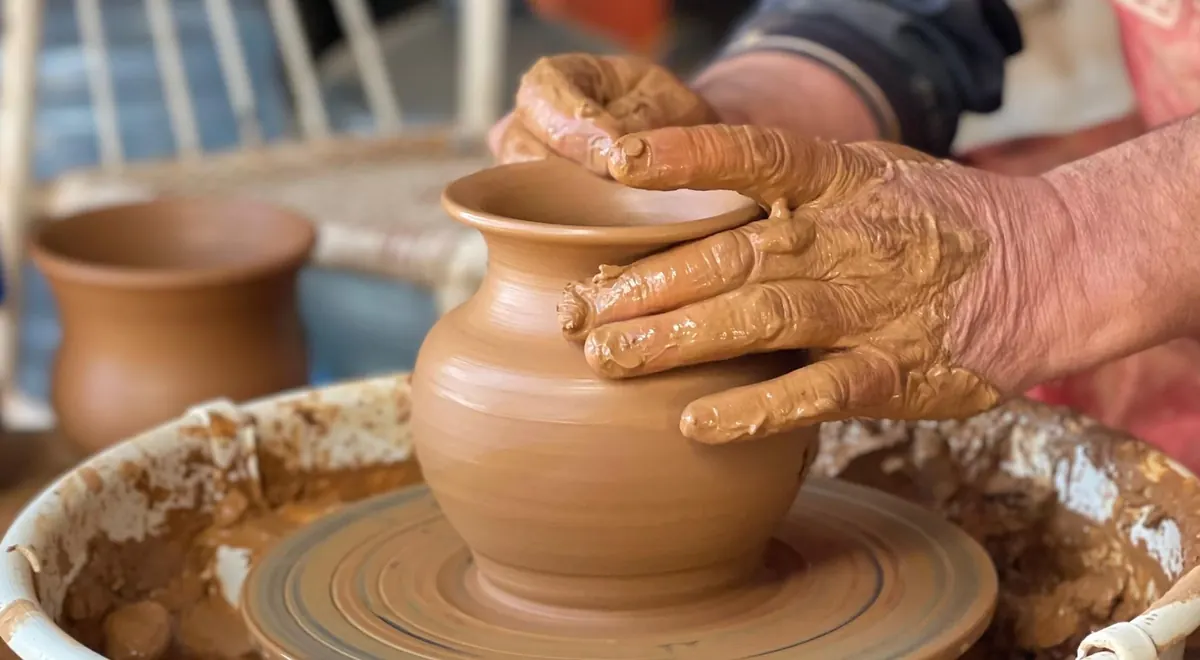
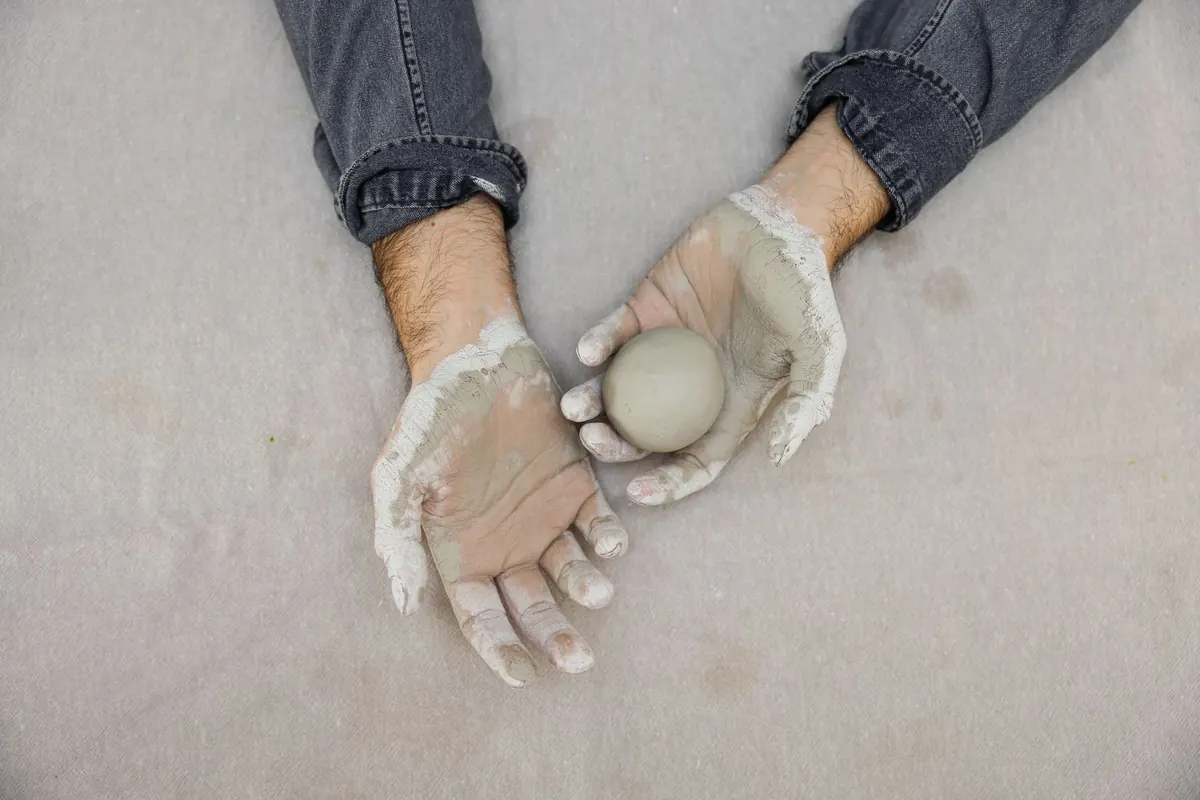
Expect to be wet from the wrists down. Expect the clay to wobble, come off-centre, and possibly collapse into a heap — centring is a genuinely hard skill and most first attempts do not produce a keepable pot. That is normal and not a reflection of your potential. Teachers usually throw a demonstration piece first, then guide you step by step: wedging, centring, opening, pulling up the walls.
At the table
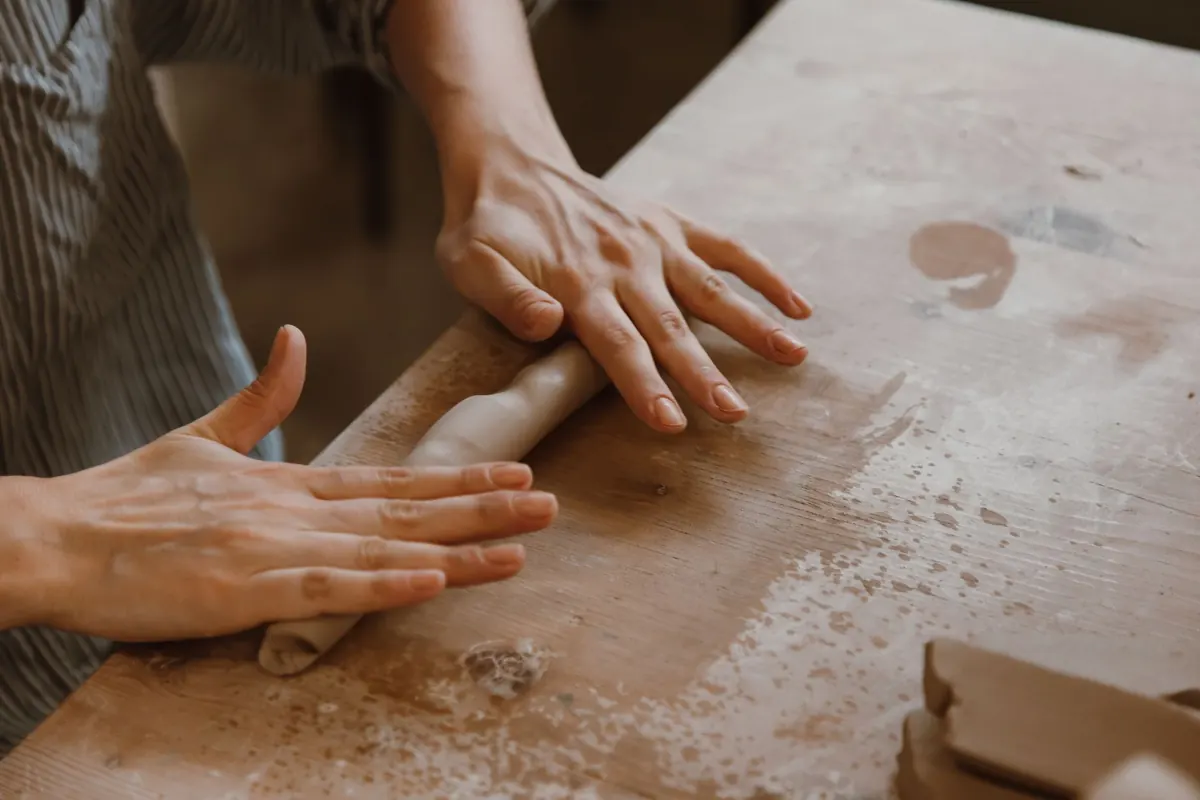
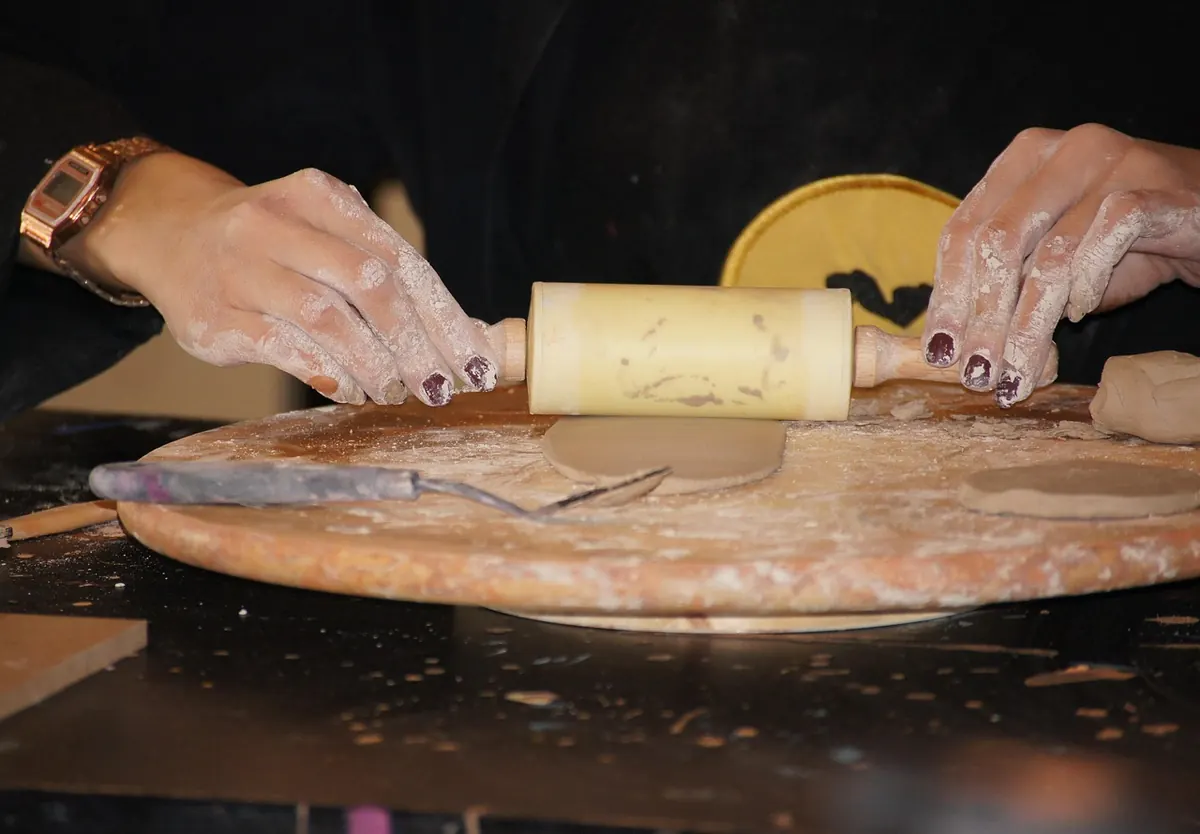
Hand-building is quieter and slower. Pinch pots, coils and slabs are the three foundations, and they let you make something recognisable in a single session without a wheel. If your hands are weak or your wrists are sore, or you simply want to focus on shape rather than speed, hand-building is usually the gentler introduction.
Your First Pots Will Not Be Your Best Pots
They will probably be thicker than you intended, slightly uneven, and one of them will crack. This is the standard outcome and nobody in the room will be surprised. What matters is the feel of the clay, the rhythm you start to find after twenty minutes, and the two or three small decisions you would make differently next time.
Firing takes time. Your work is usually dried slowly, fired once, glazed and fired again, which can take several weeks. Ask at the end of the session when pieces will be ready and how you will be contacted. If your teacher trims, recycles or quietly removes a collapsed piece, it is not a judgement on you — studios have limited shelf space and firing costs money.
Questions Worth Asking Before You Book
- Is clay included, and how much do I get?
- Are tools provided, or should I bring my own?
- Is firing included, and when can I collect my work?
- Do I glaze my pieces, or does the studio?
- Is the session wheel throwing, hand-building, or a mix?
- What should I wear and bring, and what do you provide?
- How many people are in a class, and how much one-to-one time is there?
- What is the cancellation policy if I need to reschedule?
If you have limited grip strength, back trouble or you use a wheelchair, ask about the setup when you book. Many studios can raise a wheel or offer a table-based session, but it is much easier to arrange in advance than on the day.
The Night Before: Five Minutes Well Spent
Put an old towel and an apron by the door. Choose clothes you can ruin. Trim your nails, take off your rings and find a hair tie. Charge your phone and check the studio's address, arrival time and what they asked you to bring. Then forget about it and get some sleep.
The most useful thing you can bring to a first pottery class is not equipment. It is a willingness to make something ugly for an hour and enjoy it anyway. Everyone in the room started exactly where you are.
Photo: persik232 / Pixabay
You Might Also Like
A practical field guide to finding, sampling, and testing wild clay along Italy’s coast, with safe collecting habits and simple tests for potters.
A practical costing checklist for small pottery studios, covering materials, kiln time, labor, overhead, and the wholesale and retail margins that turn a base cost into a fair shelf price.