Stoneware vs. Earthenware vs. Porcelain: Choosing the Right Clay Body
Every potter remembers the first pot that came out of the kiln exactly as intended, and the first one that didn't. Usually the culprit is not the glaze or the wheel technique. It's the clay. Pick up a bag of the wrong body and you will fight it for weeks: it slumps, it cracks, it drinks glaze, it chips on the way to the table. The three families on the shelf — earthenware, stoneware and porcelain — behave very differently in your hands, in the drying cupboard and in the kiln. Knowing what each one is built to do makes the choice far less mysterious.
What a clay body actually is
Clay dug straight from the ground is rarely used as it is. A clay body is a recipe: raw clay for plasticity, plus non-plastic ingredients such as silica, feldspar, ball clay, kaolin, grog or sand to control shrinkage, colour and firing behaviour. Those proportions decide how the body throws, how much it shrinks, and at what temperature it becomes dense and strong.
That last point is the one beginners underestimate. Every body is formulated to mature within a particular range. Fire it too low and it stays weak and porous; fire it too high and it can warp, bloat or begin to melt. Studios usually talk in cones rather than degrees — roughly cone 06 to 02 at the low end, cone 4 to 6 in the middle, and cone 8 to 10 at the top. The exact temperatures vary with the kiln and the firing schedule, so always trust the clay supplier's recommended cone over any number you read online.
Earthenware: the forgiving one
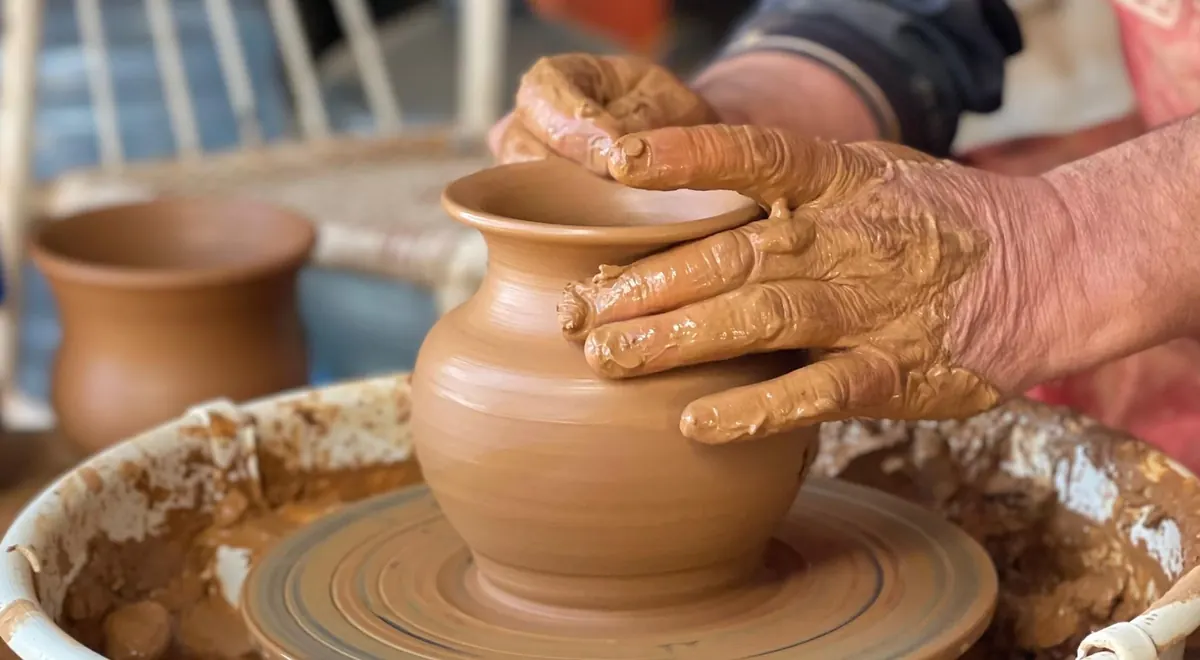
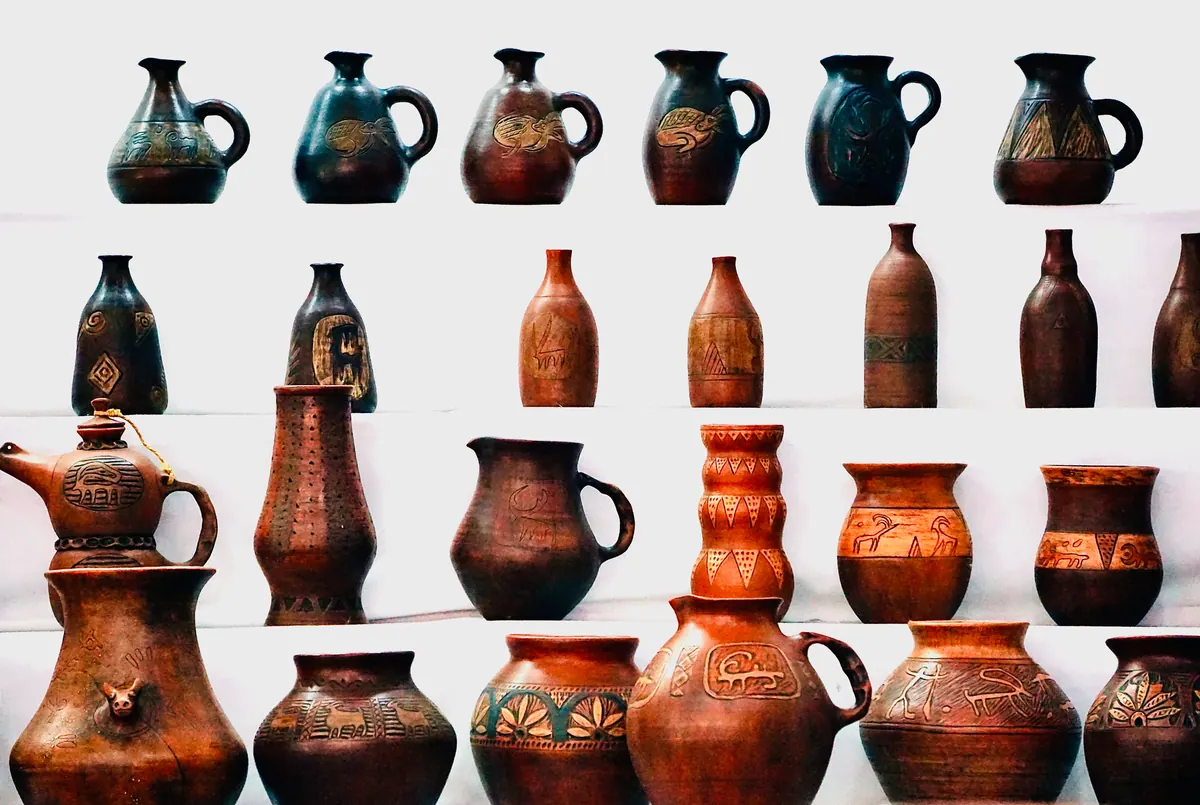
Earthenware is fired low, from around cone 06 to cone 02 — roughly 1000°C to 1120°C. Think of red terra cotta flowerpots, tin-glazed maiolica, and the bright, soft surfaces of Mediterranean tableware. The body is open and porous, plastic and generous. It tolerates being pushed around on the wheel, and it tolerates a slightly imprecise kiln, which is why it has been the beginner's clay for centuries.
Working with it
Shrinkage is comparatively low — often in the region of six to eight percent — so slabs stay flatter and thick walls are less likely to crack in drying. You can join pieces with a little slip and pressure and get away with a slightly rougher technique than other bodies allow. Its wide firing tolerance means an overshoot of half a cone is rarely a disaster.
Where it stops
Earthenware never vitrifies. Unglazed, it will weep, stain and eventually fail, so it belongs to decorative work, planters, sculpture and tiles — or to glazed pieces where the glaze fits well and the pot is treated kindly. Low-fire glazes are softer than their high-fire cousins, so a glazed earthenware dinner plate will scratch and dull with heavy knife use. Raku bodies are earthenware too, formulated to survive the shock of being pulled red-hot from the kiln.
Stoneware: the workhorse
Stoneware fires across a broad middle-to-high range, roughly cone 4 to cone 10, and comes in buff, grey, speckled, chocolate-brown and white versions. It is plastic enough to throw well and strong enough to live in a kitchen for decades. At the upper end of its range it vitrifies: watertight, chip-resistant, and tolerant of dishwashers and freezers provided the glaze fits the body.
Mid-range stoneware, fired around cone 4 to 6, has become the practical standard in many studios. It costs less to fire than cone 10, puts less strain on kiln elements, and still produces durable functional ware. High-fire stoneware is the classic choice for serious tableware, and reduction firing is where those deep celadons and iron-speckled surfaces come from.
The trade-offs are weight and colour. Stoneware is heavier in the hand than earthenware, and dark bodies mute bright glaze colours. A simple test: put the same blue glaze on a white stoneware and on a buff one and you will see two different glazes.
Porcelain: luminous and demanding
Porcelain is kaolin-rich, low in iron and high in feldspar. Fired to cone 8 and above — often around 1280°C to 1300°C — thin sections turn translucent, and glaze colours sit on that white surface with a clarity nothing else matches. It is also, by common agreement, the least forgiving body on the shelf.
Porcelain is short: low in plasticity, quick to tear when pulled, prone to cracking at rims and slumping in the kiln if supported unevenly. Its vitrification window is narrow, so a small overshoot can turn a bowl into a saucer. Shrinkage is high, typically twelve percent or more, which makes drying and joining fussy. Glazes can crawl on its dense, smooth surface, so rims need wiping and glaze is often applied a little thinner.
None of which should put beginners off trying it. A mid-range porcelain or one with added plasticiser is noticeably friendlier, paper-clay porcelain makes hand-building possible, and slip casting sidesteps the throwing problem entirely. Start with small, simple forms and accept that the first few will be practice.
The three bodies side by side
- Firing range: earthenware is low (cone 06–02); stoneware is mid to high (cone 4–10); porcelain is high (cone 8–10 and above).
- Workability: earthenware is the most forgiving; stoneware is plastic and strong; porcelain is short, technical and quick to punish.
- Porosity: earthenware stays porous and needs glaze to be useful; stoneware vitrifies at the top of its range; porcelain is dense and glassy.
- Shrinkage: lowest with earthenware, moderate with stoneware, highest with porcelain — plan sizes accordingly.
- Colour: earthenware is often red or buff; stoneware ranges from white to dark brown; porcelain is white and translucent.
- Best uses: earthenware for planters, sculpture, tiles and decorative glazed work; stoneware for everyday tableware and ovenware; porcelain for fine tableware, teapots and lighting.
Matching clay to your kiln, your glazes and your shelf
- Check what your kiln can actually reach. A kiln that reliably hits cone 6 changes the answer completely. Don't buy cone 10 porcelain because it looks beautiful on the supplier's sample board if your kiln tops out at cone 6.
- Buy one bag, not five. Make a set of test tiles from that single body, fire them to maturity, and keep them labelled with the cone and date.
- Test the glaze on the same body. Glaze fit is a relationship, not a property. A glaze that crazes on stoneware may sit perfectly on earthenware.
- Stay with one body for a while. Learn its drying speed, its trimming window, its shrinkage. Changing clays every month means relearning the same lessons.
- Ask about the batch. Bodies get reformulated, and a supplier's "white stoneware" this year may not throw quite like last year's. Note the details in a studio notebook.
A sensible way to start
If you are new to clay and want to make functional pots, pick a mid-range stoneware and stay with it for a year. It throws well, forgivingly, and it will survive the dishwasher while you learn. If your kiln is small or low-fire, or if you are drawn to hand-building, slabs and colour, earthenware will let you experiment without punishing you for it.
Porcelain can wait, but it doesn't have to. Try it on a small bowl or a handful of test tiles to feel how little it wants to be pushed around. Whichever you choose, buy from a supplier who prints the recommended cone on the bag, fire to that cone with witness cones in the kiln, and keep notes on what worked. The clay body is the one decision that shapes everything after it — and the good news is that it is a decision you can simply test your way through.
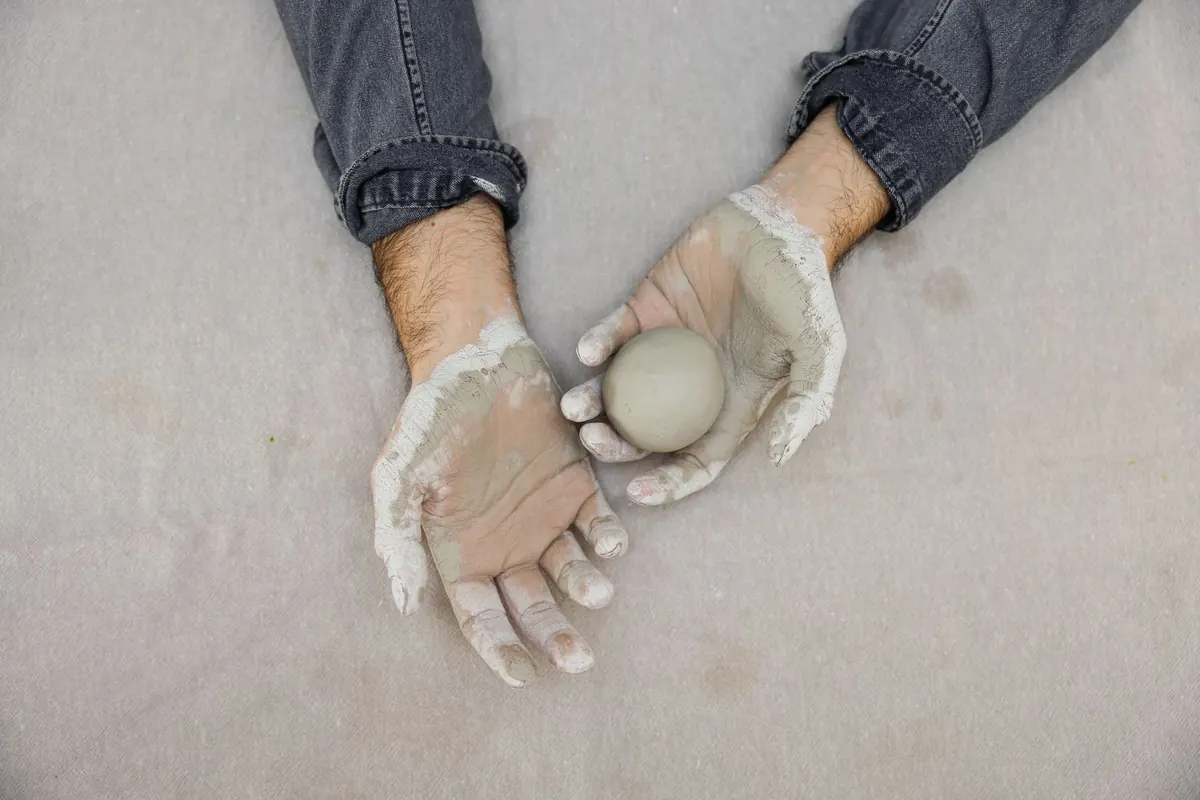
Photo: Cup of Couple / Pexels
You Might Also Like
A practical field guide to finding, sampling, and testing wild clay along Italy’s coast, with safe collecting habits and simple tests for potters.
A practical costing checklist for small pottery studios, covering materials, kiln time, labor, overhead, and the wholesale and retail margins that turn a base cost into a fair shelf price.